CLINICAL CASES
CLINICAL CASES
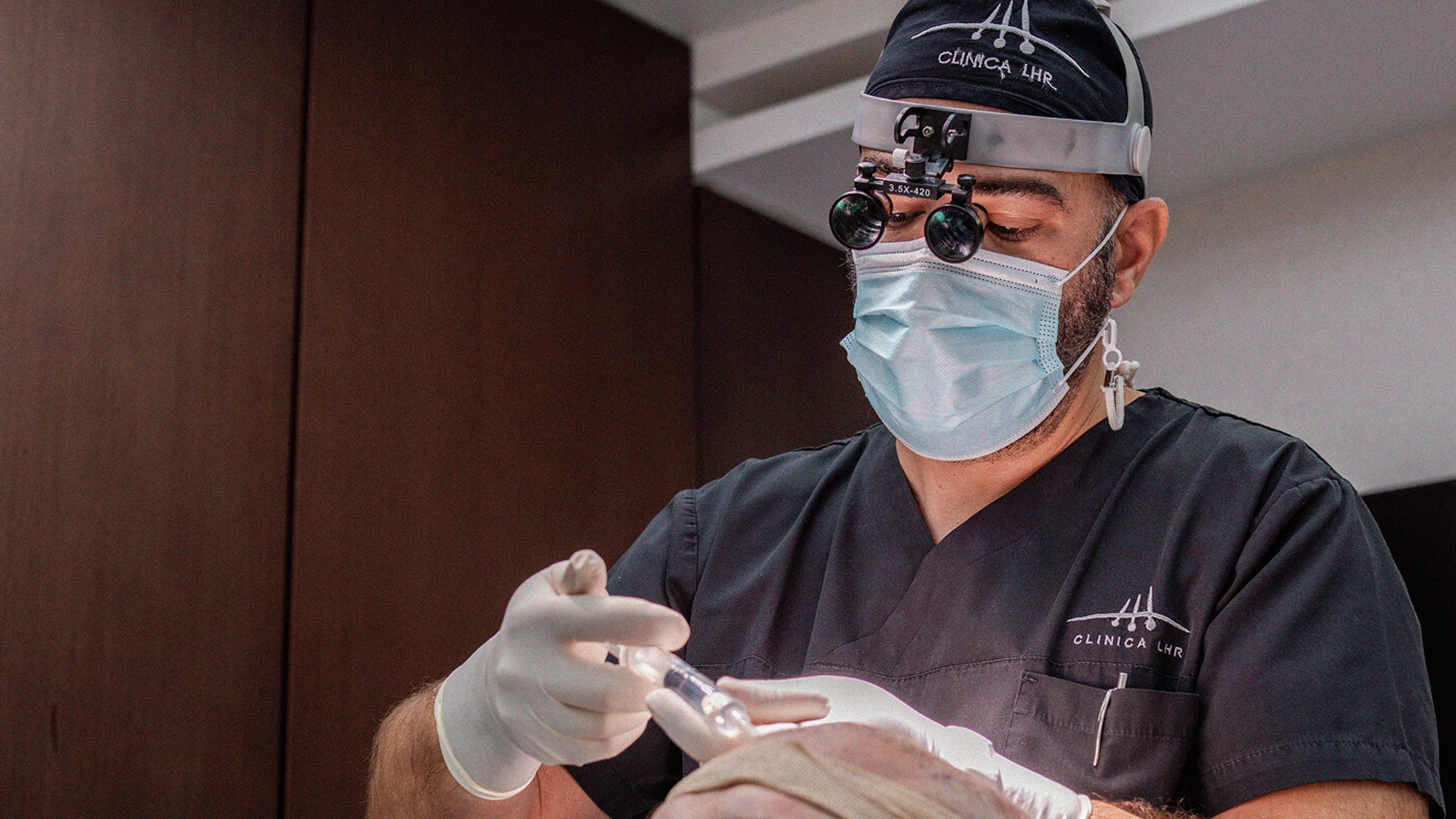
Here I share real clinical cases, followed by me from the initial assessment through to the final result. Each case reflects well-founded medical decisions, aligned expectations and solutions designed for real people, with different histories and needs. The goal is to show what can be achieved with a well-defined plan, clinical rigour and close follow-up at every stage.
ANDROGENETIC ALOPECIA
View clinical cases of androgenetic alopecia, with before and after results, indication of the treatment performed and the evolution of results over time.
Advanced Androgenetic Alopecia (Grade VI)
- 52-year-old patient
- Extensive hair loss, with complete thinning along the frontal hairline, mid-scalp and crown
- Implantation of approximately 4,920 follicular units, strategically distributed to recreate density and a natural appearance across all affected areas
- Result showing homogeneous growth, balanced density and texture fully integrated with the patient’s natural hair
- Complementary treatment with Dutasteride (0.5 mg/day), oral Minoxidil (2.5 mg/day) and quarterly PRP sessions for maintenance and density reinforcement
- One of our best results, demonstrating what can be achieved through careful planning, advanced technique and rigorous clinical follow-up
CASE 1
Androgenetic Alopecia
Androgenetic Alopecia
- 33-year-old patient
- Male pattern
- Grade IV baldness on the Hamilton–Norwood Scale, with significant thinning in the frontal and mid-scalp areas
- Implantation of 3,700 follicular units in the frontal hairline and central region
- Estimated growth of 7,000 new hairs
- Post-operative treatment with Finasteride (1 mg/day), 5% topical Minoxidil and PRP + LED therapy to optimise density
CASE 2
Androgenetic Alopecia
ANDROGENETIC ALOPECIA
- 36-year-old patient
- Male pattern
- Grade V baldness on the Hamilton–Norwood Scale, with significant thinning in the crown
- Implantation of 3,800 follicular units in the crown region and transition zone
- Estimated growth of 7,200 new hairs
- Post-operative treatment with Finasteride (1 mg/day), 5% Minoxidil and supportive therapy with semi-annual PRP
CASE 3
ANDROGENETIC ALOPECIA
FEMALE ALOPECIA
Discover real examples of female alopecia: before and after hair transplantation, the techniques applied and the complementary treatments used to optimise results.
FRONTAL HAIRLINE LOWERING
- 28-year-old patient
- Female pattern
- High frontal hairline, disproportionate to the upper third of the face
- Implantation of approximately 2,380 follicular units to redefine and harmonise the hairline
- Estimated growth of 4,700 new hairs
- Post-operative treatment with 5% topical Minoxidil, biotin supplementation and quarterly PRP therapy to optimise growth and maintain density
CASE 1
Female Alopecia
ADVANCED ANDROGENETIC ALOPECIA
- 46-year-old patient
- Advanced pattern of androgenetic alopecia, with marked frontal hairline recession and extensive involvement of the frontal and parietal regions
Significant thinning with low-density areas and hair miniaturization, with some density preserved in the posterior region - Implantation of approximately 3,200 follicular units to reconstruct the frontal hairline and enhance density in areas of greater aesthetic impact
Estimated growth of around 6,400 new hairs - Technical approach adapted to afro-textured hair, with strict control of curvature, direction, and angulation of the follicular units
- Post-operative treatment with topical 5% Minoxidil, possible introduction of systemic therapy (finasteride/dutasteride, depending on clinical evaluation), and periodic PRP protocol to stabilize progression and optimize results
Case 2
Female Alopecia
Diffuse Female Alopecia
- 31-year-old patient
- Female pattern
- Diffuse thinning in the frontal region and midline, consistent with female androgenetic alopecia
- Implantation of approximately 2,450 follicular units to enhance hair density
- Estimated growth of 4,900 new hairs
- Post-operative treatment with 5% topical Minoxidil, iron and biotin supplementation, and quarterly PRP to maintain density and stimulate follicular activity
CASE 3
Female Alopecia
FRONTAL HAIRLINE REDUCTION
Discover real cases of hair transplantation for frontal hairline reduction. See the before and after, how the procedure was performed and which complementary care measures were applied.
Advanced Baldness
- 38-year-old patient
- Male pattern
- Case of androgenetic alopecia, Grade VI on the Hamilton–Norwood Scale
- Strategic distribution of follicles in the upper area and vertex to achieve a homogeneous result.
- Corrective procedure with 4,560 follicular units,
- Post-operative treatment with Finasteride 1 mg and Minoxidil 5% to strengthen native hair and enhance results.
CASE 1
Frontal Hairline Reduction
FRONTAL HAIRLINE REDUCTION
- 38-year-old patient
- Male pattern
- Grade III baldness on the Hamilton–Norwood Scale, with significant thinning in the frontal hairline
- Implantation of 3,100 follicular units in the frontal and temporal areas
- Estimated growth of 5,800 new hairs
- Post-operative treatment with Finasteride (1 mg/day) and 5% Minoxidil, complemented with biotin supplementation and PRP
CASE 3
Frontal Hairline Reduction
CORRECTION OF PREVIOUS HAIR TRANSPLANT
- 37-year-old patient
- Male patter
- Case of androgenetic alopecia, Grade V on the Hamilton–Norwood Scale, with an unsatisfactory result from a previous transplant performed in a black-market clinic
- Corrective procedure with 4,800 follicular units, distributed across the frontal hairline, mid-scalp and crown to increase density and improve naturalness
- Estimated growth of 9,400 new hairs
- Post-operative treatment with Dutasteride (0.5 mg/day), oral Minoxidil (2.5 mg/day) and quarterly PRP to optimise the result of the new graft
CASE 3
Frontal Hairline Reduction
O Dr. Augusto e a sua equipa são extremamente profissionais. Excelente trabalho no meu transplante capilar. Recomendo muito.
Rafael Rocha
O Dr. Augusto demonstrou excepcional conhecimento técnico durante todo o processo de transplante, prestando atenção constante aos detalhes importantes e oferecendo orientações claras e ponderadas em cada etapa da minha recuperação. Tudo correu bem e estou muito satisfeito com os resultados após 18 meses. A equipa também criou um ambiente acolhedor e de apoio, demonstrando genuíno cuidado ao ouvir atentamente antes de cada consulta.
Bruno Dias
Hugely happy with my results 10 months down the line it just keeps getting better. I was in and out in a day, very professional service and i would not hesitate to recommend it to anyone considering getting this done. Dr Guerreiro and his team were sensational. Very good value. I know people who paid 2x, 3x more than me in other places and their results are nowhere near as good.
Mike Rodgers
Big thanks to Dr. Guerreiro and his team. Very good work and perfect communication ! I’ll be back for sure!
Tony Banchamek
Hi doc, just wanted to say thank you for the great job you did with my hair. It’s not even 5 months yet but the results are really pleasing. I’d recommend you to anyone wanting a hair transplant.
Mark Cohen
READY TO START YOUR TRANSFORMATION?
Take the first step. Your personalised assessment is the starting point for a treatment plan created to your measure, with a guarantee of excellence.
Request information
I am available to clarify doubts and guide the next step.
Clinic
Av. da Liberdade, Nº 144, 8º Dto 1250-146 Lisboa
Phone
(Call to national mobile network)
FREQUENTLY ASKED QUESTIONS
Are the hair transplant results presented permanent?
The results are long-lasting when the hair transplant is properly indicated and followed, but androgenetic alopecia may continue to progress in other areas. Therefore, medical follow-up is essential and, in many cases, care should be complemented with hair treatments tailored to each case.
Can female alopecia be treated with hair transplantation?
Yes, in selected cases. Medical assessment determines whether there is an adequate donor area and sufficient stability to proceed.
Do female alopecia cases have different results from male cases?
Yes. Planning is different and results depend on the pattern of hair loss, existing density and response to complementary treatments.
Can I undergo a hair transplant without cutting my hair?
Yes, in selected cases. I use the FUE Long (or Long FUE) technique, which allows hair transplantation without shaving the hair, maintaining its original length. This technique is indicated for people with long hair, an adequate donor area and specific clinical criteria. When properly indicated, it offers results similar to traditional transplantation, with the advantage of greater discretion in the post-procedure period.
Do the clinical cases include treatments in addition to hair transplantation?
Yes. Many cases include complementary hair treatments to optimise, maintain and prolong results.
How long did it take to reach the final result in the cases presented?
The final result appeared, on average, between 9 and 12 months after hair transplantation, depending on the case.
Were all the clinical cases presented followed by Dr. Augusto Guerreiro?
Yes. All the clinical cases presented were assessed, planned and followed by me at the LHR Clinic.
Are the hair transplant results presented permanent?
The results are long-lasting when the hair transplant is properly indicated and followed, but androgenetic alopecia may continue to progress in other areas. Therefore, medical follow-up is essential and, in many cases, care should be complemented with hair treatments tailored to each case.
Can female alopecia be treated with hair transplantation?
Yes, in selected cases. Medical assessment determines whether there is an adequate donor area and sufficient stability to proceed.
Do female alopecia cases have different results from male cases?
Yes. Planning is different and results depend on the pattern of hair loss, existing density and response to complementary treatments.
Can I undergo a hair transplant without cutting my hair?
Yes, in selected cases. I use the FUE Long (or Long FUE) technique, which allows hair transplantation without shaving the hair, maintaining its original length. This technique is indicated for people with long hair, an adequate donor area and specific clinical criteria. When properly indicated, it offers results similar to traditional transplantation, with the advantage of greater discretion in the post-procedure period.
Do the clinical cases include treatments in addition to hair transplantation?
Yes. Many cases include complementary hair treatments to optimise, maintain and prolong results.
How long did it take to reach the final result in the cases presented?
The final result appeared, on average, between 9 and 12 months after hair transplantation, depending on the case.
Were all the clinical cases presented followed by Dr. Augusto Guerreiro?
Yes. All the clinical cases presented were assessed, planned and followed by me at the LHR Clinic.
